For more than a decade IRIS has provided a nurturing and welcoming after school program
By John Curtis
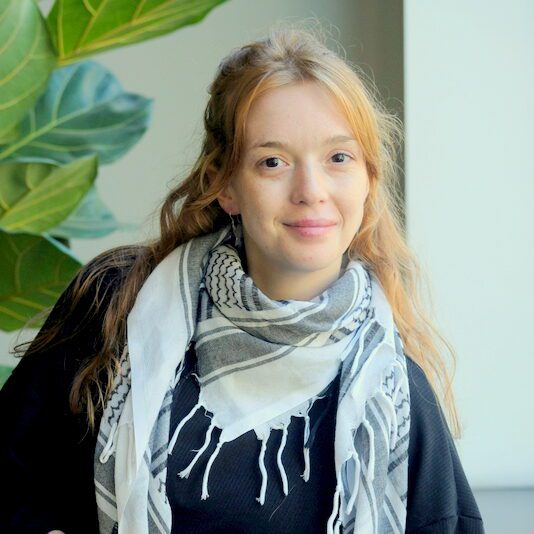
In 2016, eight-year-old Tasneem Musa arrived in New Haven with her parents and three younger brothers. She was just three when civil war drove her family out of Syria and into Jordan, where they spent five years waiting for a visa to come to the United States. Upon their arrival, no one in the family spoke English.
In school and at home, Musa felt pressured by her teachers and parents to learn English, but because she couldn’t speak English, she remained an outsider at school. That changed in 2018 when she became one of the first students to enter a new after-school program at IRIS.
“IRIS was a place where I could practice my English and where I could talk about things, because you can’t always talk to parents about certain things,” she said. Teachers tutored her, helped her practice English, guided her through her homework, and taught her how to play the piano. “It was a space for us to debrief, talk about our emotions, how school’s going, and then learn something that was amazing. I got my homework done during that program and I was a straight-A student.”
In late October Musa was at an after-school session of IRIS’s Youth Mentorship & Leadership Program, which helps newly arrived immigrants and refugees adapt to their new environment by addressing their academic, social, and emotional needs. It relies on a staff of volunteers and students from the Migrant Alliance @ Yale. Musa, however, was there not as a participant, but as a volunteer talking to a dozen high school girls about the importance of having a resume for job and college applications and walking them through the steps to craft one.
“We’ve been planning since last year to bring college readiness into the group, because from my experience with the girls, a lot of them were worried about college,” she said. She wanted to share what she’d learned at the New Haven Academy where she’s a senior. “When I was in their place, I felt isolated from my classmates. I felt like I didn’t have anyone to relate to.”
Musa has been volunteering with IRIS for about a year, mostly tutoring and helping with homework, “and just talking to the girls about where they’re from, connecting with them in some way.”
On that Monday in October in a space at the United Church on the Green, the session began with pizza, then a grammar lesson as Program Coordinator Jennifer Hartley asked the students to explain the difference between a noun and a verb. She then asked the girls to find on a list of adjectives one that began with the same letter as their first name. “I am Afsana, and I am artistic,” offered one girl.
The session moved on to a 10-minute video of a TED talk on mindfulness before Musa began her presentation on resume writing.
The youth leadership program for high schoolers began about eight years ago, and falls under the umbrella of youth education, which also includes a K-12 summer program and a third- to eighth-grade after-school program. The after-school program began in the fall of 2018 with musicians Jessy Griswold and Sammy Colon as the first teachers. At the Bethesda Lutheran Church on Whitney Avenue they provided a mix of playground time, snacks, tutoring, help with homework, and music lessons. Each year about 35 students participate in the program.
The high school program, which serves 75 to 100 students each year, was initially a mentorship program, with each student assigned a mentor. “They would get together and talk about what they want from the program,” said Omar Yacoub, associate director of youth education.
“The high school students are the most vulnerable because a lot of them either came from another country and went directly into high school, which is very overwhelming, and their language barrier is a serious problem,” Yacoub said. “I see this program as that space for them to ask for whatever support that they need, be able to build up a community that they feel that they can trust and, to help them with their skills, with their language and to have a better future after high school.”
Yacoub is planning to add a bridge program for students about to enter college. Many students, he said, find that once in college they lack the academic English they’ll need. “We’re thinking of how to have a bridge between high school and university to allow students to discover more options than a four-year degree and how to better prepare them, whether it’s language or skills, and build an individual kind of plan for them.”
Last year, Erin Kelly, then the education coordinator and now director of volunteer engagement and communications, along with her colleagues on the education team, made another change to the youth leadership program. Instead of having all students come to the program four days a week, they split it up into two weekly sessions by gender. “It’s a very different dynamic sometimes,” Kelly said. “The comfort level of girls being in an educational environment with boys – versus just girls – can be a little overwhelming. It ended up being the boys took over, and very few girls came.”
During the summer session genders were still combined until they planned two overnight trips to Boston. One was boys-only and the other girls-only. In advance of the trips the students were assigned to research a Boston historical figure. “And if there was a special location that was important for their person, they did a little oral presentation with some flash cards.”
When the 2024-2025 school year started last fall, the girls attended on Mondays and Wednesdays and boys on Tuesdays and Thursdays.
The students hail from a variety of countries, regions, and continents. There are Spanish-speaking immigrants, Arabic, Dari, and Pashto speakers from the Middle East, and English speakers from African countries. Many have had little or no education and are not literate in their native tongues. Apart from didactic sessions, the goal is also to give the students a respite from school and home.
“Many young students don’t have a third space,” Kelly said. “So to give them a space that they can just come to that isn’t family, that isn’t the pressure of school, that it’s just a place to hang out, was really important. While we’re creating that space, we want to make it beneficial so they can work on their English skills. It’s a very different teaching environment, considering the cultural differences, language barriers, age differences. Throw everyone into a room together after school and see what happens. And there’s actually a lot of fun.”
As for Musa, she credits the after school and leadership programs with helping her advance in her studies. She spent last summer interning in a lab at the Yale School of Medicine and is applying to Yale College as a biology major.
“I am in love with biology,” she said. “I love DNA. I love genetics. I love cells. And I’m a TA for our bio class at our school. I want them to like the subject and also fall in love with it, because absolutely, it’s like a love language for me.”
IRIS Craft Fair Coming Soon!
On December 6th, IRIS will host its annual Craft Fair, a celebration of creativity and community featuring handmade jewelry crafted by the girls of the Youth Leadership Program. These unique pieces reflect the students’ cultures, stories, and artistic growth nurtured through the program. The event offers a chance to support young refugee and immigrant artists while finding meaningful gifts for the holiday season. All proceeds go directly to supporting youth programming at IRIS