immigrant family photos

This Being Human is a Guest House

Mohammadi Family Reunion 2024

By Rachel Peet

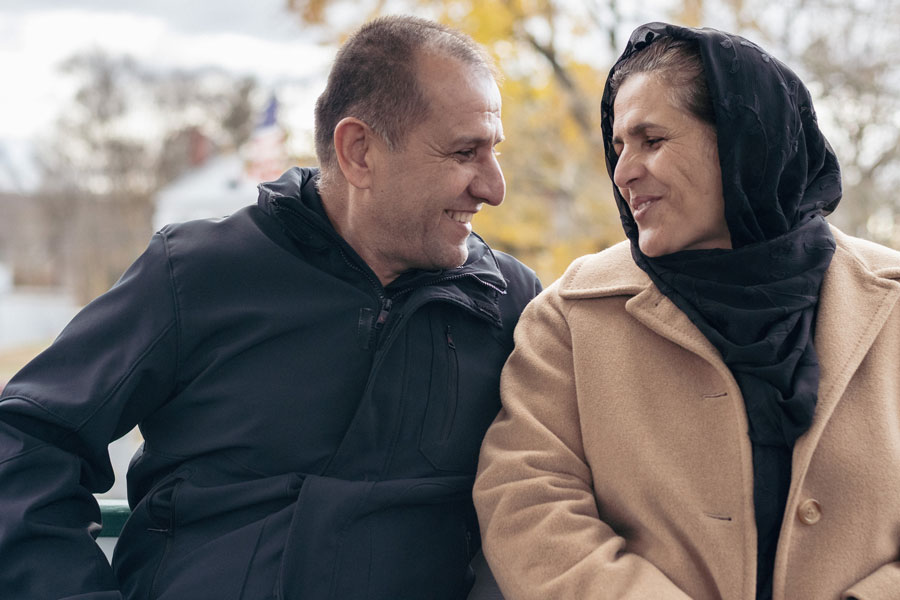
Arriving in the U.S. three years ago without his immediate family, Mohammad Mohammadi starts each day with an open perspective. Rising before dawn, he finds inspiration in the poetry of Mewlana Jalaluddin Rumi, which fuels his drive to embrace growth and face challenges.

One such challenge was reuniting with his family in Afghanistan. With support from New Milford Refugee Resettlement and the Welcome Corps program, a national initiative helping Americans sponsor newcomers, Mo navigated the nearly year-long application process. Through it all, he drew strength from Rumi’s words, most specifically these: “This being human is a guest house.”

August 25, 2021, six days before his solitary arrival, is a day Mo will never forget. Overwhelmed by separation, loneliness, and uncertainty, he braced himself for an uncharted chapter far from his family.

Boarding an overcrowded Air Force C-17 with over 700 others fleeing the Taliban’s resurgence in Kabul was never in Mo’s plans. He had been studying Chinese at a private university, his eldest sister was in dental school, and his siblings were thriving in education—two at their uncle’s “Rumi High School.” Their father, Mokhtar, had successfully established two educational institutions in Kabul, including “Jawana-Haye Farda” (“Youth of Tomorrow”).

This vibrant life centered on education ended abruptly on August 15, 2021, when the Taliban seized control of Afghanistan. Within days, their rights to education vanished, and their world was upended by a suicide bombing at the airport, derailing Mo’s family’s flight to the U.S. In just two weeks, the unknown became Mo’s new reality, and his sense of home transformed into an unfamiliar “guest house.”

Six days after his final moments with his family on August 31, Mo began adjusting to life at Fort Pickett, Virginia, where he spent nearly five months navigating patience and uncertainty. As one of the first 100 Afghans to arrive, he watched 15,000 others process through before him. Brief connections—with fellow newcomers, marines, a kind bus driver, and distant family via WhatsApp—offered solace and helped him adapt to the unknown.

After months of waiting, Mo’s life took a hopeful turn. On January 28, 2022, his new sponsors, Eileen and Gerard Monaghan of New Milford, greeted him at Bradley International Airport, ready to welcome him into their community. Soon, isolation and uncertainty gave way to new experiences: his first McDonald’s meal, exploring local schools, and connecting with a supportive community.

The warmth and care he received turned his “guest house” into a place of belonging and security.

With the Monaghans’ support, Mo built a strong foundation for his achievements here in the States. Since settling in New Milford in January 2022, he has worked multiple jobs (currently as a Relationship Banker at Ives Bank), earned his driver’s license, purchased a car, started undergraduate studies at WCSU, and provided translation services for organizations like NMRR and WRRP. In April 2023, he was granted asylum.

The launch of the Welcome Corps program’s “Naming Phase” in December 2023 marked a pivotal moment for Mo. This phase of the initiative allows U.S. citizens to nominate specific displaced individuals or families for resettlement, enabling long-awaited reunions. Mo collaborated with NMRR and Welcome Corps to apply for the reunion with his loved ones, bringing him closer to reuniting with his family than ever before.

From December 2023 to October 21, 2024, Mo and NMRR worked tirelessly to gather documentation, fundraise, and prepare a welcoming “guest home” for his family’s arrival.

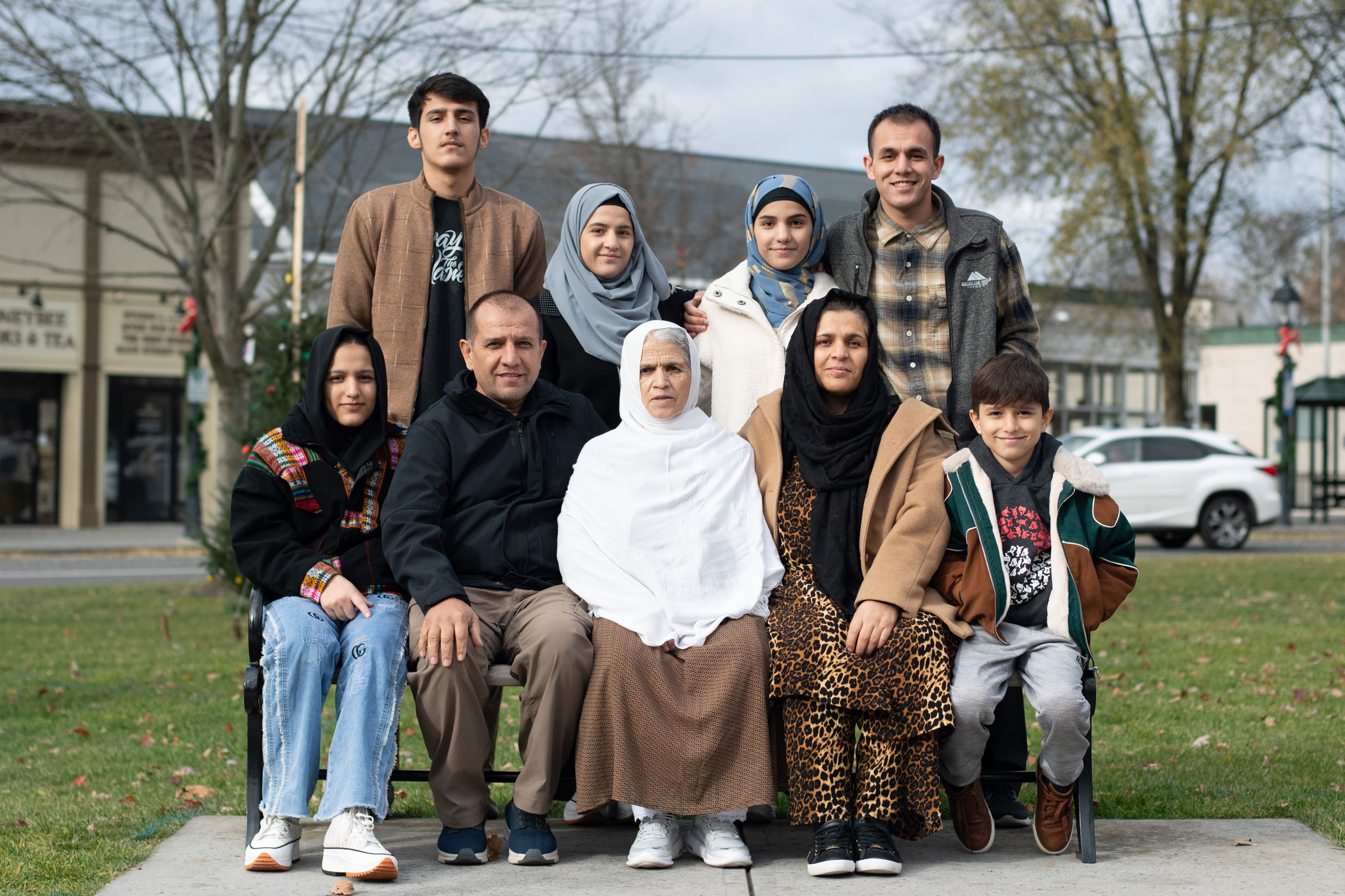
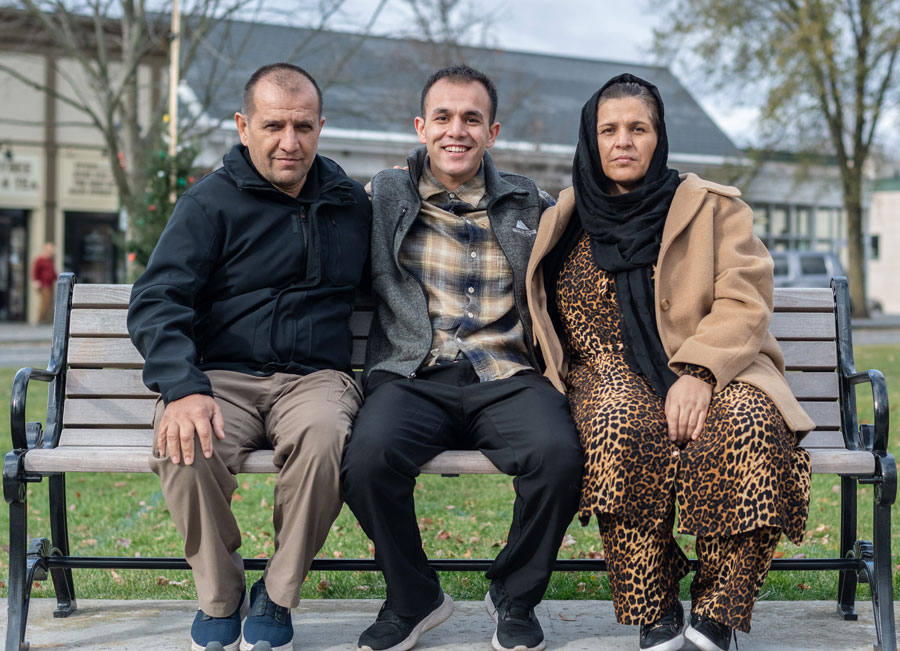
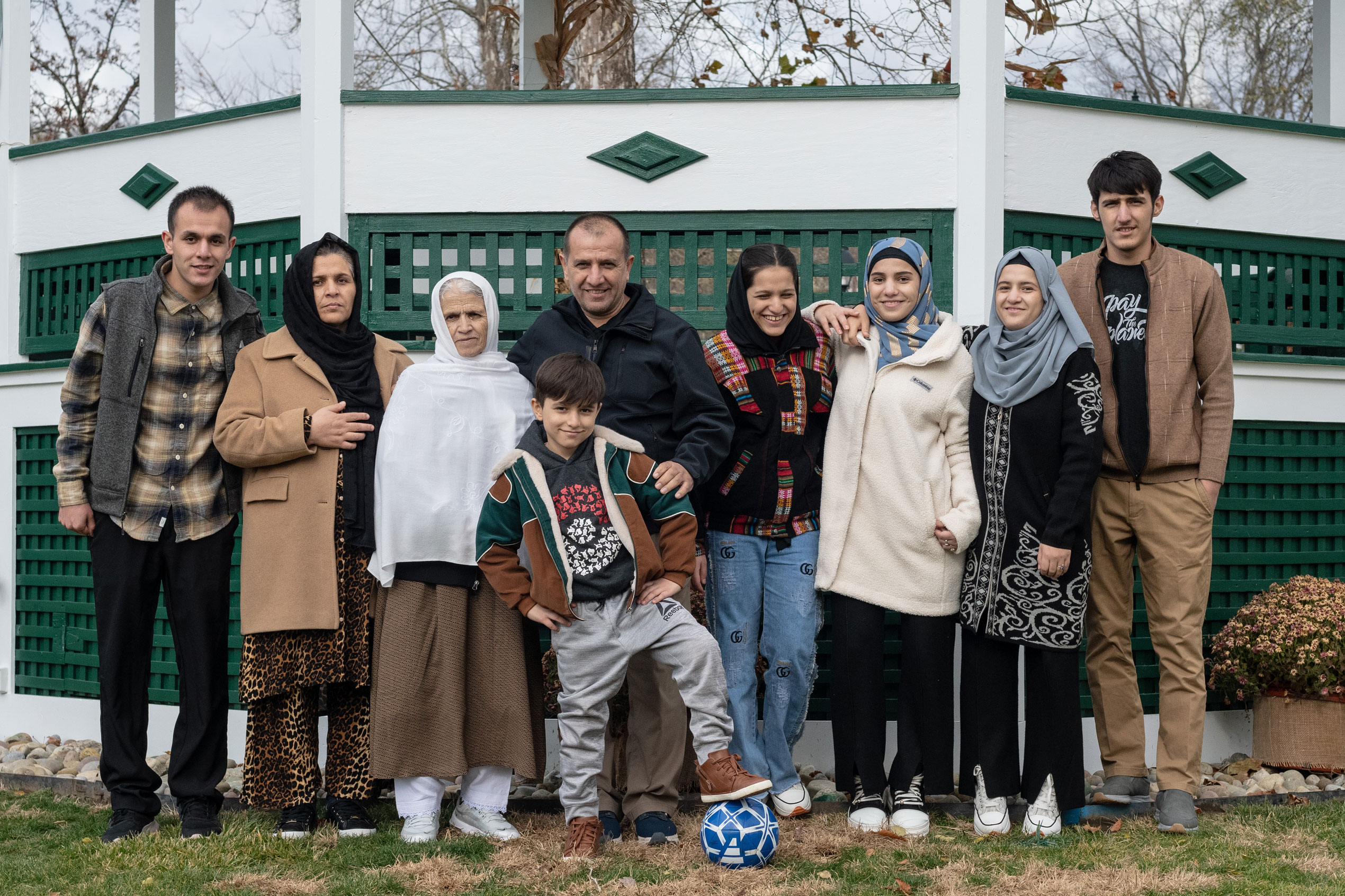
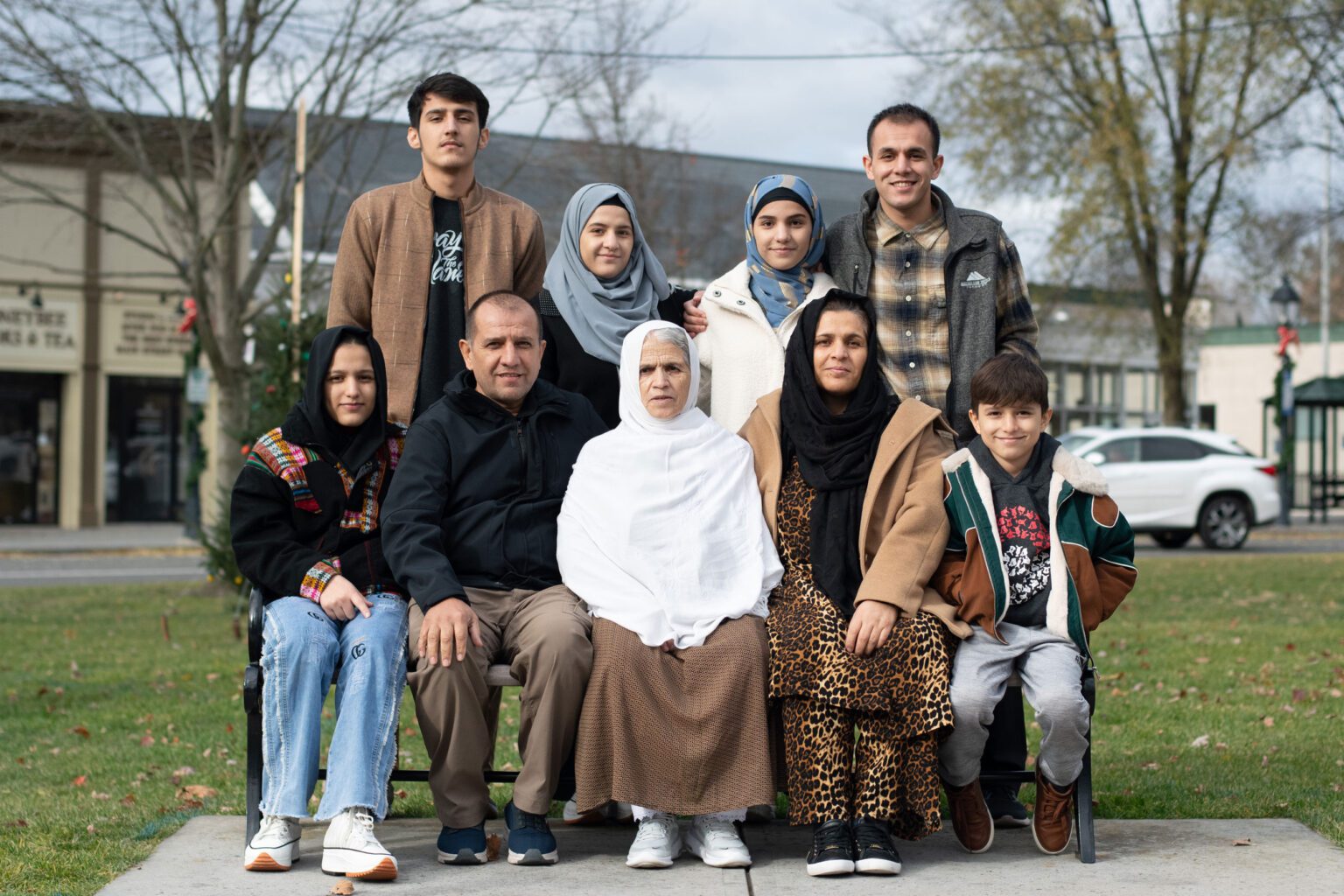
For Mo, there was immense relief in no longer needing to embrace “uncertainty”as he finally embraced the presence of his very own family members that evening. “It was like a huge weight had been lifted off my shoulders after carrying it for so long.” Infinite smiles, both visible and heartfelt, were shared amongst all six siblings, their parents, grandmother, uncle, and the few friends who could join the reunion.

As Mo’s siblings and father reflected on that unforgettable evening at the airport during a recent English lesson, each of them expressed the same sentiment: “I felt happy.” This newly learned phrase will forever evoke the irreplaceable memories of that extraordinary day.

In just a few months, Mo and his family have settled comfortably into their New Milford apartment. They’ve embraced new routines: Mo’s parents and sister Hasina (20) attend English classes with Literacy Volunteers on the Green, while Ahmad (17), Hadisa (14), Bahar (12), and Mustafa (8) have started public school. With support from NMRR, the family has attended medical appointments, accessed food banks, and secured essential documents, including social security cards and driving permits for Mokhtar and Hasina.

Though the rhythms of life here are vastly different from their days in Kabul, the family remains hopeful and determined to pursue their dreams in this new chapter.

As Mo emphasized in a recent conversation, “The meaning of life is to be hopeful… I want everyone to have their life resemble how it was in the past as much as possible. I hope my dad can start a business, and I want the rest of my siblings to focus on their schooling.”

Mokhtar, the family’s father –also known as “Baba” –is an entrepreneurial spirit eager to start a local business and guide others in the workplace. Roqia, their mother, enjoys cooking and dreams of improving her swimming skills, inspired by the nearby lakes and ocean.

Hasina, the eldest sibling and, in many ways, a second mother to the family, plans to return to school to study business, improve her English, and pursue entrepreneurship. Ahmad, the second eldest brother, is passionate about math, hopes to study cybersecurity and enjoys soccer, cricket, and chess.

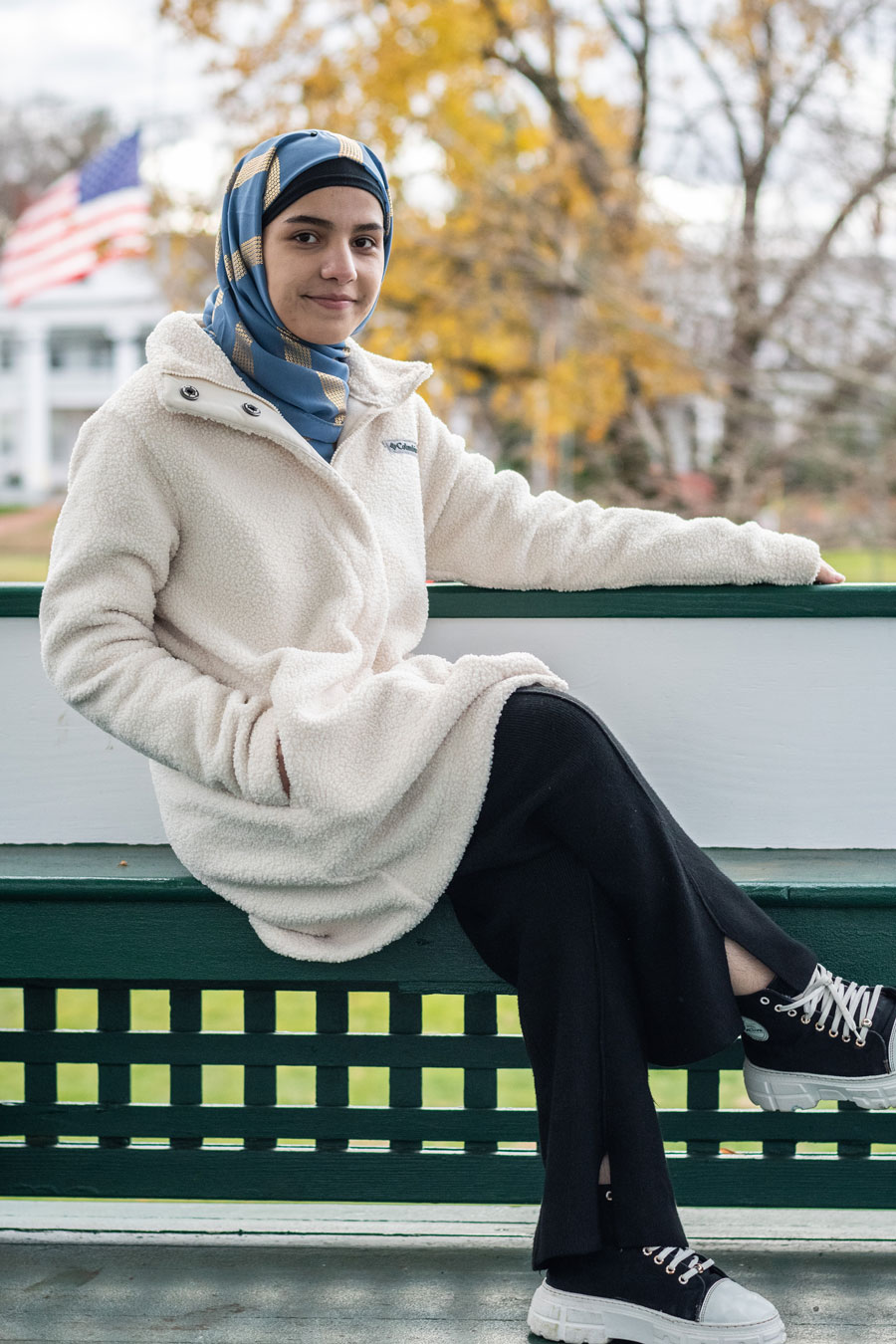
Hadisa, the second eldest sister, is a budding artist who aims to deepen her artistic skills and improve her English during high school. Bahar, the youngest sister, is a soccer enthusiast and dog-lover, dreaming of adopting a pet dog once the family has settled permanently.

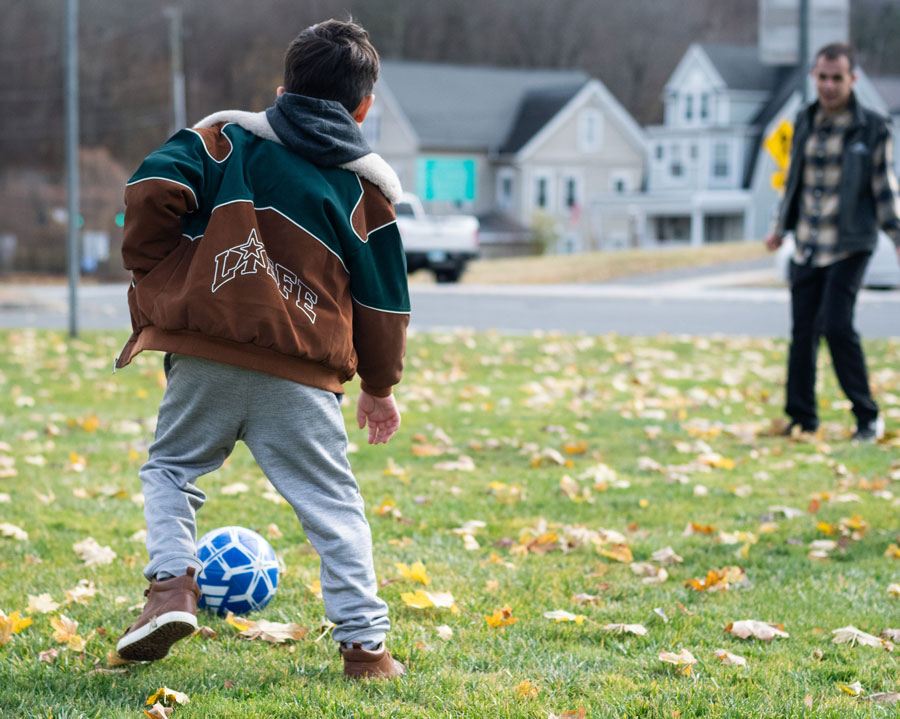
Mustafa, the youngest, is a chess prodigy often outmatching his father and brothers. He thrives on outdoor activities, including riding his bike, playing soccer, and simply being outside in the sunshine.

Mo’s “guest house” has grown in every sense. Physically, his home has become a source of comfort, strengthened by his connections within the New Milford community and the joyful reunion with his family under one roof. Figuratively, his perspective has broadened, embracing life’s challenges with greater resilience and a mindset focused on growth.

With this expanded outlook, Mo, his family, and the refugee resettlement community are ready to welcome faith and hope as they look to the future. As Rumi wisely said, “Be grateful for whoever comes, because each has been sent as a guide from beyond.” Inspired by the Mohammadi family’s example, we remain grateful for the lessons challenges bring and the continuous opportunities to warmly welcome others into our shared “guest house”, here in the United States.

Check out our new merch shop!

IRIS CT merch - tshirts and products to support immigrants

Your purchase directly supports refugees and immigrants—providing housing, education, and hope. Every item makes a difference.

PUBLISHED BY THE DAY Oct 29, 2025

AG Tong, talking immigration in New London: 'They will make it if we fight for them'

 
tong-speaking-on-immigration

Attorney General William Tong speaks at All Souls Unitarian Universalist Congregation in New London on Wednesday, Oct. 29. The event by Integrated Refugee & Immigrant Services focused on the impact of President Donald Trump’s immigration crackdown. (Alison Cross/The Day)

By Alison Cross
Day Staff Writer
 
New London — State Attorney General William Tong visited the city Monday evening to share a message of hope and resistance amid President Donald Trump’s immigration crackdown.
The event at All Souls Unitarian Universalist Congregation was organized by Integrated Refugee & Immigrant Services, the New Haven-based nonprofit known as IRIS.
Since 1982, IRIS has welcomed and resettled thousands of refugees and immigrants within the state, but Maggie Mitchell Salem, the organization’s executive director, said new federal policies have upended longstanding pathways to legal immigration.
As a result of these changes, Mitchell Salem said IRIS will not participate in the U.S. government-supported refugee admissions program for the first time in the nonprofit’s history, starting on Jan. 1. Mitchell Salem said IRIS will continue to resettle refugees from Afghanistan and other countries without federal funding.
During his speech, Tong described the Trump administration’s policies and actions over the last nine months as “awful, brutal, (and) painful.” Tong spoke about lawsuits he has filed against the federal government to block the Trump administration from ending birthright citizenship and coercing states into following the administration’s immigration agenda.
Tong said people often put refugees and immigrants into separate categories but “very often they’re one and the same.”
“My grandparents and my dad ran for their lives (from China),” Tong said. “I’m a kid that comes from refugees and immigrants. I grew up in a Chinese restaurant. … If you go to a takeout joint around here and you see a high schooler ring up your Tuesday night takeout, that was me.”
“In one generation, I went from that hot Chinese restaurant kitchen in the state of Connecticut in Wethersfield, to being the 25th attorney general of the state,” Tong continued. “I don’t tell you that story because it’s a good story, I tell you that story because it is an unremarkable story. It is a story shared by so many people. And there are kids right now, our kids in this city, the sons and daughters and grandchildren of refugees and immigrants who are just like us … and I know they will make it if we fight for them right now.”
Maryam Elahi, the president and chief executive officer of the Community Foundation of Eastern Connecticut, said that right now, children are not getting an education because “so many parents are terrified to take their kids to school (and) pick them up.”
“This is not acceptable,” Elahi said.
Elahi encouraged people to reframe the way they speak about immigrants.
“Unless you’re a Native American, you’re an immigrant in this country,” she said. “Some of us came earlier on boats. Some of us came later by foot or plane or both, but the end result is the same. It’s really important for all of us to change the narrative, to talk about immigrants as all of us, to talk about immigrants as people who bring so much richness to our community and to put our arms around them.”
Jeanne Milstein, the human services director for the city, said that New London’s history is rooted in immigrant communities who have made the city stronger.
“It is our diversity which is our strength. New London is a seaport town. It has always been a rich mix of people. It is a community where everyone is welcome,” Milstein said. “The feds may be trying to kill the American dream, but here in New London, it is alive and well.”

PUBLISHED BY THE HARTFORD COURANT

After four decades, CT organization won’t resettle refugees this year. Here’s why

For the first time in more than four decades Integrated Refugee & Immigrant Services made the decision to not resettle refugees through the United States Refugee Admissions program, due to the Trump administration’s intent to shift the program’s focus.
“We will not resettle populations that aren’t refugees,” said Maggie Mitchell Salem, director of IRIS. “That is basically the point. This is not about Afrikaners or right wing groups in Europe. This is not about ideology or politics. This is about our mission. Our mission is to resettle the world’s most vulnerable people who have been screened for the credible fear they possess which keeps them from going home.”
Mitchell Salem added: “We are not a relocation service. We work with and for a very specific population and as part of the humanitarian pathway within this immigration system.”
The New York Times reported Wednesday that the Trump administration “is considering a radical overhaul of the U.S. refugee system that would slash the program to its bare bones while giving preference to English speakers, white South Africans and Europeans who oppose migration.” 
The Trump administration has said that white South African farmers face discrimination and violence at home, which the country’s government strongly denies.
The IRIS board made the decision last month to change course after learning about the Trump’s administration’s plans to change the refugee program, including limiting the number of refugees to 30,000 to 40,000, Mitchell Salem said.
“That only reinforced that decision,” Mitchell said. “We have never had to question the U.S. government’s decision. This is not about who is in charge of our government. We have supported refugee resettlement in Republican administrations, and Democratic administrations without fail. We had to do some critical thinking about whether based on what we understood to be the administration’s policy on the U.S. refugee program, whether there was an alignment between our mission and how they were implementing the program.”
The Church World Service, which IRIS is an affiliate of, and contracts with the State Department to help refugees “expressed its dismay and deep concern in response to the Trump administration’s plans to reduce the refugee admissions’ goal “to the lowest level in history,” according to a press release from the agency.
New numbers reported from the Associated Press suggest the Trump administration is considering admitting far fewer refugees than IRIS had initially learned, with just 7,500 admitted.
Dana Bucin, an immigration attorney and partner with Harris Beach Murtha in Hartford, said the administration’s ban against refugees at the beginning of 2025 is not advisable.
“The entire policy that is against refugees in particular is harmful at a time when the world is seeing a record number of refugees due to wars, civil wars, famine, climate change and a bunch of other factors,” she said. “We have never had so many refugees as we do now and so few tools to deal with them and so definitely in general an anti-refugee policy is not conducive to humanitarian endeavors.”
Bucin said she does not believe that all Afrikaners qualify as a group for refugee status.
“But as attorneys we are open to hearing of any individualized case of persecution for Afrikaners, much like anyone else,” she said.
Since the Trump administration suspended the refugee program in January, IRIS relocated its New Haven office and had to shut its Hartford office.
In fiscal year 2024, IRIS served more than 2,000 people and resettled 900 refugees.
In fiscal year 2025 they were planning to resettle 800 refugees but have only been able to settle 241 refugees as many were denied entry or delayed.
As a result of the suspension of the refugee program, IRIS lost about $4 million in funding and had to lay off employees.
In the United States, some 128,000 refugees have currently been approved for resettlement in the United States and are now stuck in limbo, said Mark Hetfield, president of HIAS, the Jewish refugee resettlement agency. In addition, 14,000 Jews, Christians and other religious minorities in Iran have long been registered with the refugee program.
New vision
IRIS is not suspending its activities though. The organization is realigning its focus to help refugees and immigrants with assistance securing housing, food, addressing health issues and advocating for more English Language Learning programs to help them succeed in the workforce, Mitchell Salem said.
Mitchell Salem said she is concerned about provisions in Trump’s Big Beautiful Bill particularly eliminating SNAP for refugees. She said IRIS needs more support to provide basic proteins for refugees in its food pantry.
Targeting ELL programs aligned to workforce development programs is critical, she said, so “people are getting the right vocational training and entering these programs successfully and entering higher paying jobs in the healthcare, hospitality and manufacturing sector. This is a win for the state. The state has to become more competitive.”
Mitchell Salem said IRIS will focus on deepening partnerships with the Chambers of Commerce and workforce boards and adult literacy organizations that exist in every town and city in the state.
In addition to those being barred from entering the country, Mitchell Salem said immigrants who are here are being terrorized. Calling it inhumane, Mitchell Salem said rounding up of people in the community at their place of employment is having an impact on everyone.
“It is going to impact the price of food and whether your grandmother is being taken care of in an assisted living community,” she said. “It is impacting employers. It is impacting tax bases. You don’t remove this significant number of people from our community and have no impact.”
With ICE arrests continuing in Connecticut and immigrant advocates calling for state officials to act, lawmakers are in discussions about increasing legal protections during an upcoming special session.
ICE agents stormed a Hamden car wash Wednesday and detained and took away eight people including a husband and wife and a customer, according to information from state Sen. Jorge Cabrera’s office.
“Since we passed the TRUST Act a decade ago, Connecticut has always carved out exceptions for dangerous felons,” Cabrera said in a statement. ”Democrats don’t have a problem with that. Neither does the governor. What we do have a problem with is Donald Trump and ICE telling us that they are arresting the scum of the Earth – murderers and gang members and pedophiles. And then who do they arrest? Landscapers. Dishwashers. High school kids. People working at car washes.”
The Associated Press contributed to this report.

Originally Published: 

October 17, 2025 at 5:37 AM ED